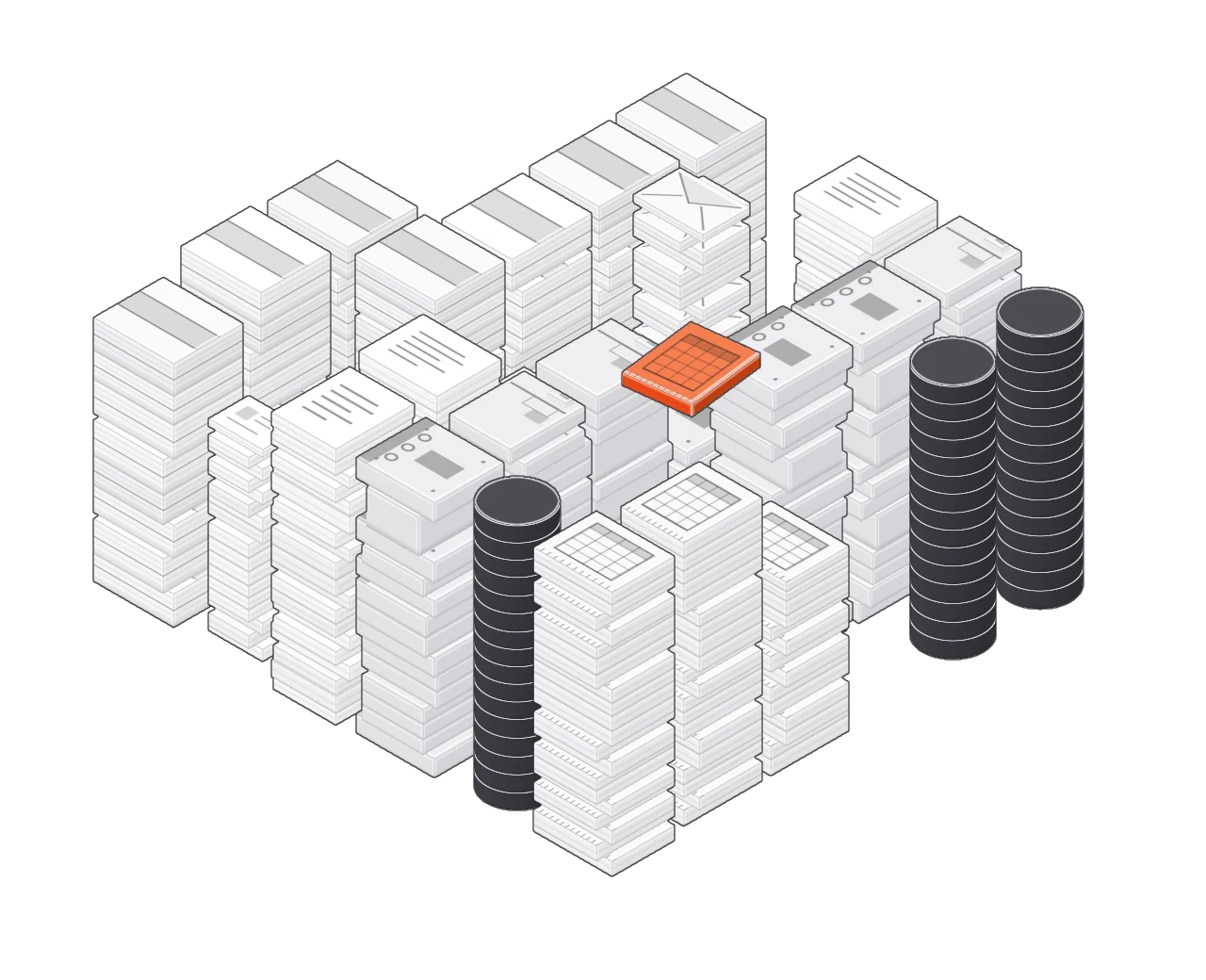
“It’s been sitting there for eighteen months, building this bank of knowledge that we haven’t done anything with.”
“We haven’t had chance to look.”
When someone asks, the answer is scattered across the CRM, spreadsheets, notes and inboxes.
Years backToday
Someone exports and counts. Someone else noted it differently. Meanwhile customers drift off without saying so, and nobody sees it until they have gone.
What is one regular customer worth to you a year?
Heard in meetings this year
“I’ve got no flipping idea.”
“All these unconnected systems with information nobody realised they needed.”
Customers rarely announce that they are leaving. Their orders get smaller, the gaps between them get longer, and by the time anyone notices, they have gone. Years of order history show that pattern forming months before it finishes, in time to pick up the phone.
Useful to account managers and the owner
A law firm, twenty years of matters
Which introducers actually send us work?
Referrals arrive through people the partners know, and everyone has a feel for who sends the most. Nobody can say for certain, so the same people are invited to everything out of habit. The work is to trace which relationships produce fees and which have gone quiet.
Twenty years building the systems that hold data: websites, platforms, databases and tools
Years of moving and cleaning data out of old systems into new ones
This year, a charity’s case notes going back over ten years, read for the impact hidden in them
This year, a law firm’s whole referral network mapped, kept current and valued, so marketing money goes where the work comes from
The method
I work with AI to process data.*Where your records hold personal or sensitive details, they can be anonymised or filtered by script before any AI tool sees them. Agreed with you before anything is provided.I check what it finds against your records, and we work out together what it means and what to do next.
You can, if you know your data is sound and what to ask. If not, the first stage finds out before you pay for a full run on thin data.
A hundred real notes vs ten thousand bare rows
How is this different from the dashboards we already have?
A dashboard shows what is happening and leaves the rest to you. One client asked me for a dashboard before anything else, and I said it would not give them the answers they need. They needed answers in writing, with something to do about each.
What if our data is a mess, or sensitive?
It usually is, and sensitive data is the normal case. Outdated contacts and notes in free text are the normal starting point, and working through them is part of the job. What can’t be fixed is data that was never recorded, and the first stage finds that out.
Where your records hold personal or sensitive details, they can be anonymised or filtered by script before any AI tool sees them.
Agreed with you before anything is provided
Read-only access
Sensitive data anonymised by script, if required
Working copy deleted after an agreed period
For example: A property company’s occupier list turned out to hold twenty-seven leases ending inside the year and a dozen tenants who no longer existed.
For example: One charity’s partner list turned out to name the wrong person at most of the organisations on it.
How much work is this for our team?
About an hour to get me access. Nobody fills anything in; the reading is done on what’s already written, and the first stage says whether it can answer your question.
We don’t know what we want to ask. Is that a problem?
No. Working out the right questions is part of the first stage.
For example: A first question can be as plain as: who used to buy from us and stopped?
Why not do it ourselves?
If someone on your team has a few clear weeks, they can. This is for when nobody has, and you want someone who does this all day. I do the first reading with AI and tools built for your data, and every finding is checked against your records before it reaches you.